COOPER’S LIVE READ
More AU→VN senders are
sending less than usual.
1 in 4 now · last check 1 in 6 · usually 1 in 14
Amounts down across 3 consecutive sends.
Cooper expects the next send in 9 days.
 FX & money transfer
Cooper learns each customer’s payment rhythm, checks the wider context
and forecasts what may happen next, from one relationship to a whole network.

EXPLORE BOTH VIEWS · SELECT TO SWITCH · SAMPLE DATA
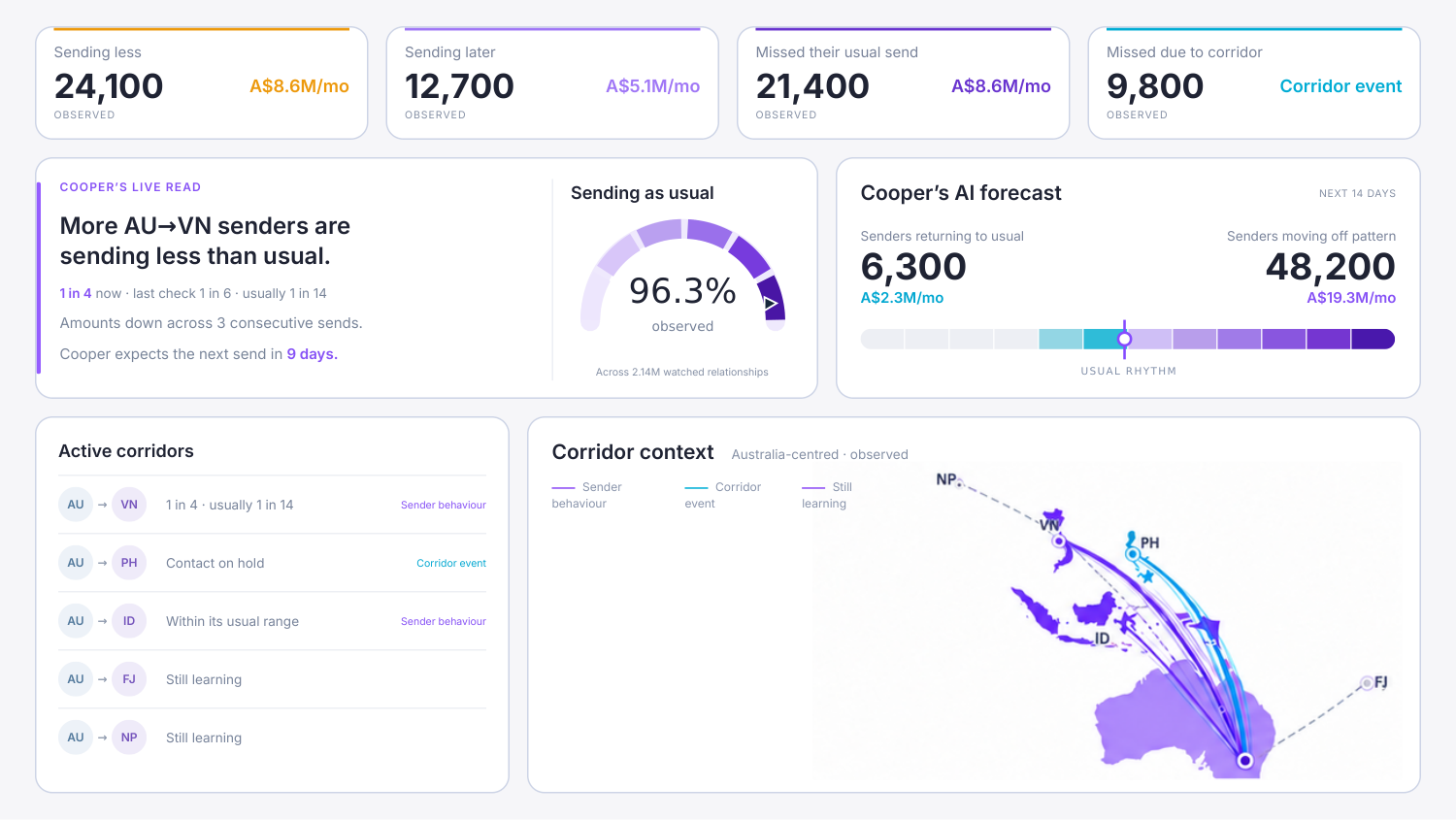
Dashboard preview · Explore the interactive view on desktop.
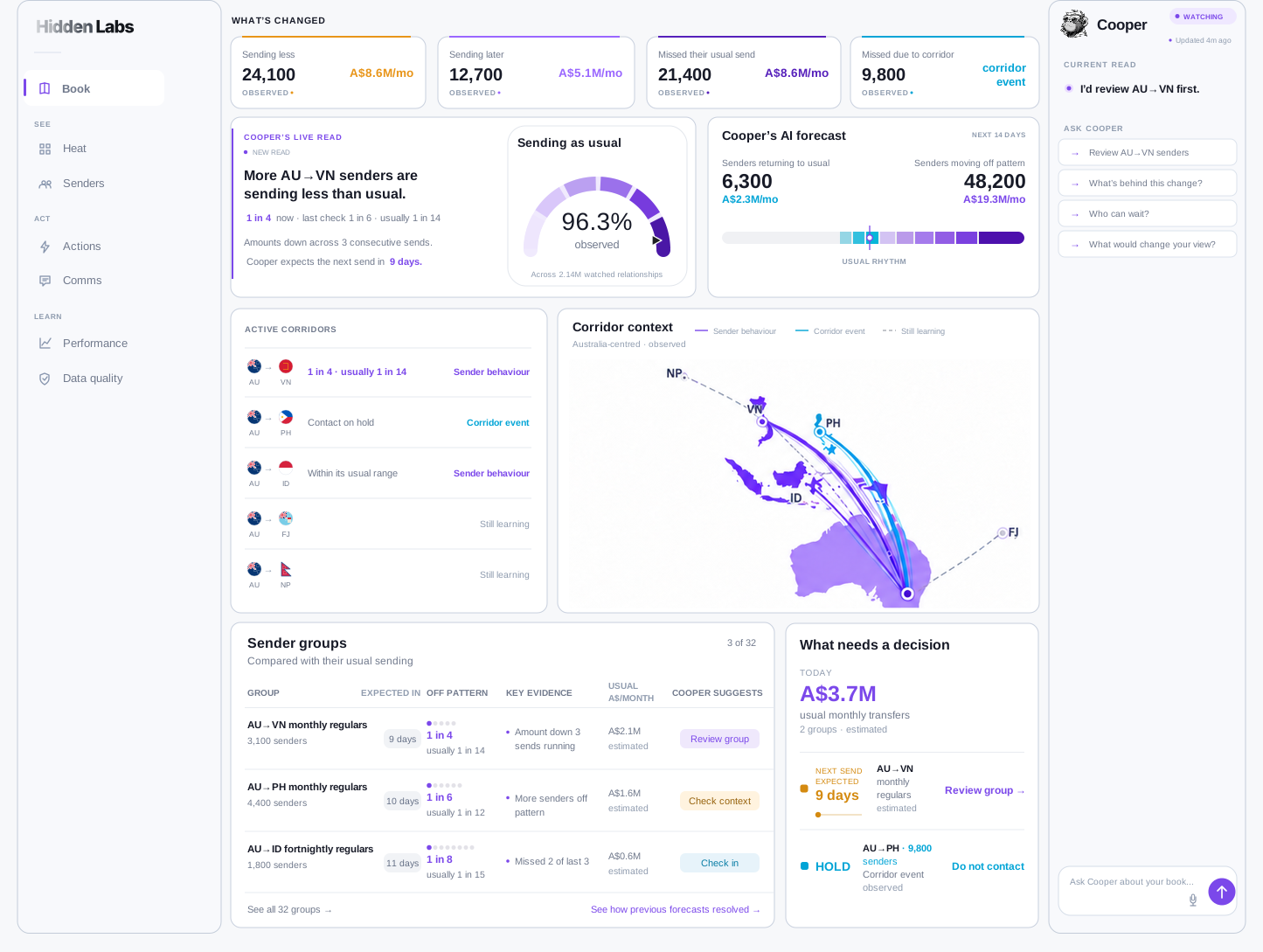
Sending less
Sending later
Missed their usual send
Missed due to corridor
COOPER’S LIVE READ
1 in 4 now · last check 1 in 6 · usually 1 in 14
Amounts down across 3 consecutive sends.
Cooper expects the next send in 9 days.
Senders returning to usual
6,300A$2.3M/moSenders moving off pattern
48,200A$19.3M/mo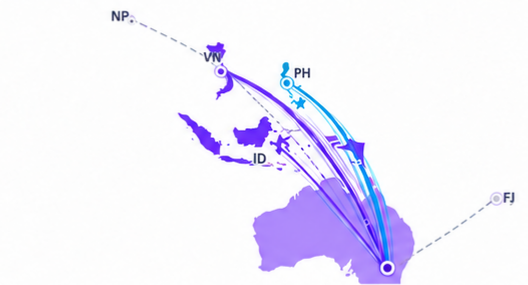
Dashboard preview · Explore the interactive view on desktop.
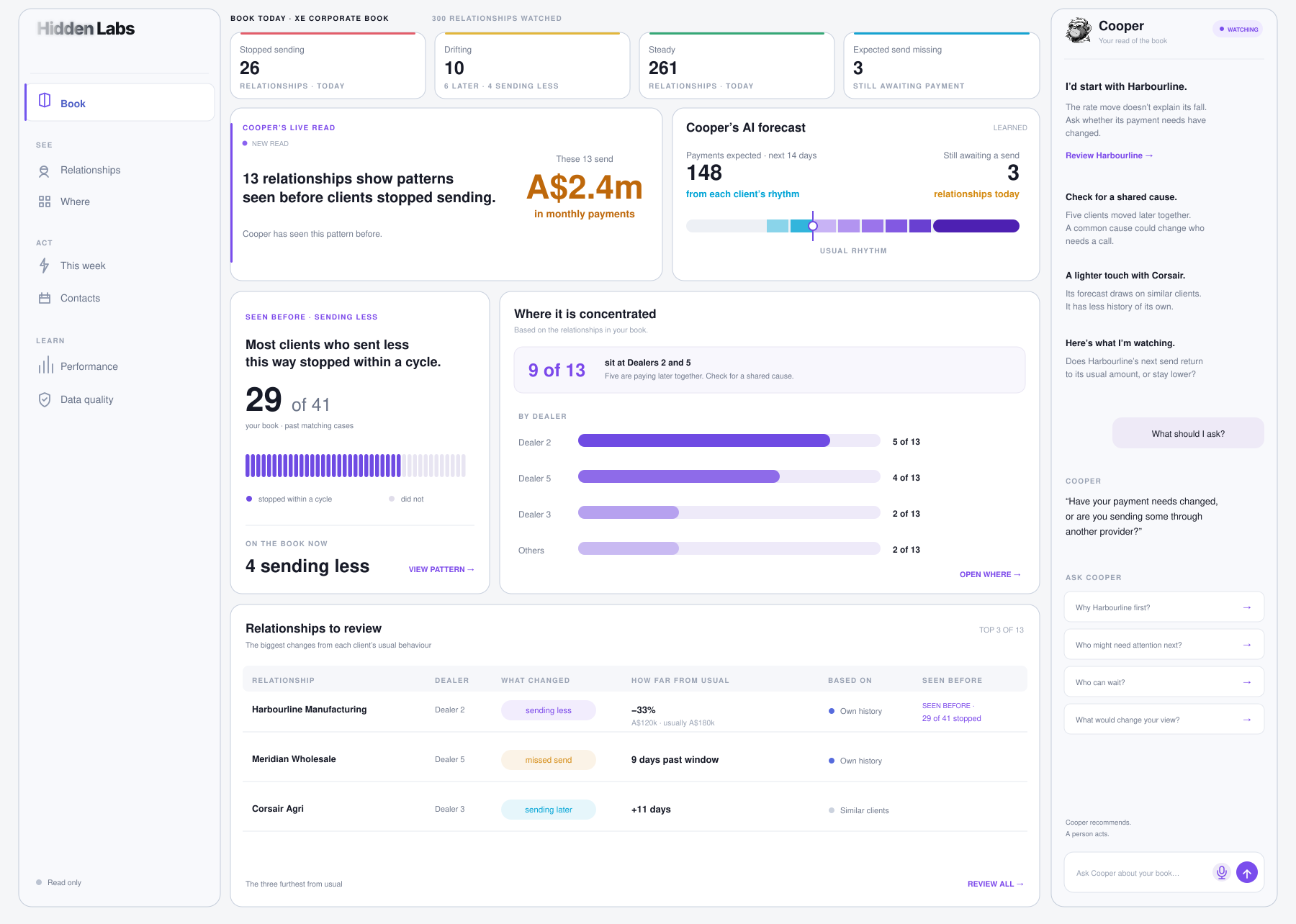
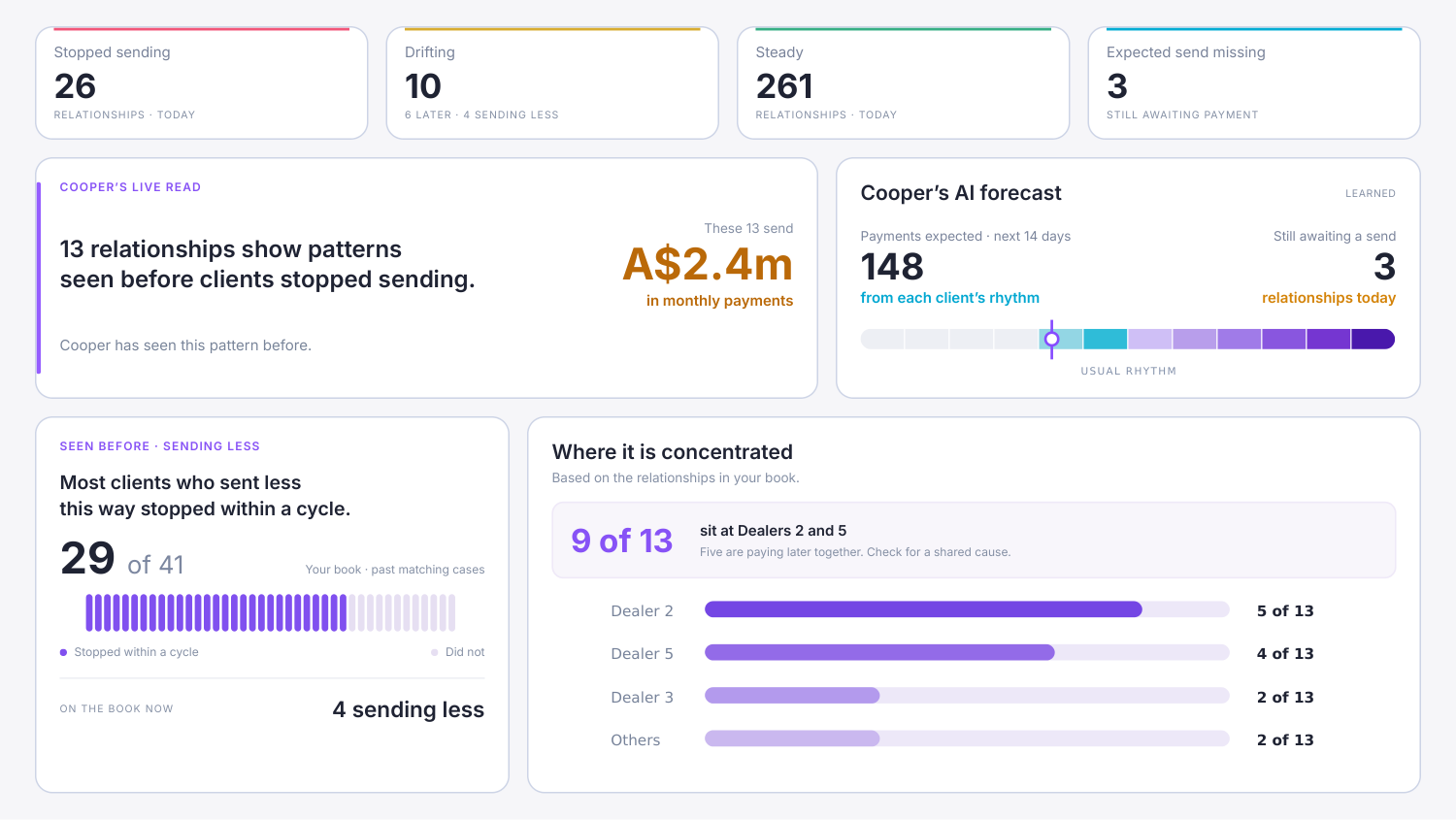
Stopped sending
Drifting
Steady
Expected send missing
COOPER’S LIVE READ
Cooper has seen this pattern before.
Payments expected · next 14 days
148from each client’s rhythmStill awaiting a send
3relationships todaySEEN BEFORE · SENDING LESS
Based on the relationships in your book.
The individual, in context
A change across a corridor can look very different from a change in one customer. Cooper keeps both views connected.
It checks the population, corridor and cohort around each relationship, including market and calendar effects, before deciding what deserves attention.
THE INDIVIDUAL, IN CONTEXT
See where behaviour is changing.

Check whether customers are moving together.

Compare timing and value with their own history.

Keep the reason and the outcome in view.
HARBOURLINE · ILLUSTRATIVE TIMING
 Expected next send
Last send 19 days ago · usual gap 28 days
9 daysexpected
The next expected send
Expected payments are learned from each customer’s established history. They are behavioural expectations, rather than invoice due dates.
Cooper considers developing changes and similar historical outcomes, so the team can see what to watch and when a conversation may matter.
 Ask Cooper
Ask what changed across corridors, which senders need attention and what may be explained by a shared event.
Cooper connects individual payment rhythms with corridor events, wider conditions and past outcomes. Your team decides how to respond.
Your read of the network
Two corridors. Different reasons.
A corridor event explains the AU→PH change.
AU→VN senders are moving off their own rhythm.
Scripted concept · Cooper recommends. Your team acts.

Explore the patterns, expected activity and developing change
already present in your payment history.
